
The study analyzes the role of digital payments and new financial tools in Latin America as instruments for promoting e-commerce among SMEs. It outlines how these instruments (digital payments and fintech solutions) have become essential for accessing non-face-to-face commerce. The study reviews the theoretical and empirical literature on the subject, discusses ways to address the widespread use of cash in the region, and provides policy recommendations to foster the adoption of digital payments and new financial tools.

The publication analyzes the dynamics, capabilities, and challenges of triple-impact innovation ecosystems in Latin America, understood as networks of public, private, academic, and social actors that promote solutions with positive economic, social, and environmental impact.
The objective of the study is to gather evidence on the export performance of firms in the region, identify the challenges they have faced as a result of the war in Ukraine, understand the support measures they have received from their governments, and assess companies’ forward-looking perspectives regarding their businesses.

Digitalization and the data-driven economy are creating a new stage of territorial competitiveness, in which artificial intelligence (AI) plays a fundamental role in improving productivity and public management. The Roadmap for the Strategic Adoption of AI in Argentina’s Provinces proposes that provincial governments adopt AI in ways that foster productive, inclusive, and sustainable development, while addressing risks and avoiding the widening of existing gaps. This document presents a framework for understanding different types of AI and their impact, along with opportunities in specific sectors such as agribusiness and logistics. It identifies challenges, use cases, and requirements for capturing value across different productive contexts. In addition, it provides a detailed roadmap that includes establishing a vision and objectives, diagnosing and prioritizing challenges, assessing capabilities and gaps, creating enabling conditions, implementing pilot projects, and ultimately scaling the benefits in an equitable manner.

This study examines the potential of Triangular Cooperation in Artificial Intelligence between the European Union and Latin America and the Caribbean as a mechanism to foster inclusive, ethical, and sustainable digital development.

The study analyzes the functioning and prospects of voluntary carbon and biodiversity markets, as well as environmental certification schemes, with a focus on Argentina’s agricultural sector and its potential to support the transition toward regenerative practices.

This study seeks to examine the educational and professional pathways of women in STEM disciplines (Science, Technology, Engineering, and Mathematics) in Argentina and to identify the obstacles and barriers they encounter in entering the labor market and progressing in their careers.
Through the contributions of more than 40 leading global experts, this INTAL-IDB report analyzes the risks and opportunities of intelligent machines in areas that are highly relevant to the region’s productive profile and its integration into the global economy.
Based on a quantitative and qualitative research study, we explore the international outlook, technology consumption habits, education, expectations, and employment situation of young Argentinians, who, in the short and medium term, will be among those most affected—either positively or negatively—by the Fourth Industrial Revolution.
Our study examines, through a survey of firms from six branches of Argentina’s manufacturing industry, (i) the current and expected degree of adoption of new technologies, and (ii) their current and anticipated impact on labor demand within firms in the sector.

Issue 45 of the journal Integration & Trade, entitled The New Factor of Trade, examines the voices of Latin Americans through the scientific lens of behavioral economics, econometrics, big data, and artificial intelligence.

The study analyzes the role of digital payments and new financial tools in Latin America as instruments for promoting e-commerce among SMEs. It outlines how these instruments (digital payments and fintech solutions) have become essential for accessing non-face-to-face commerce. The study reviews the theoretical and empirical literature on the subject, discusses ways to address the widespread use of cash in the region, and provides policy recommendations to foster the adoption of digital payments and new financial tools.
This study seeks to determine whether gender gaps exist within firms in Latin America and the Caribbean according to their export profile, and examines the extent to which firm characteristics, as well as factors related to the economic and social structure of countries, may influence gender inequality in companies across the region.

In its 48th issue, the journal features six studies that are aligned with the region’s trade and investment policy agenda concerning knowledge-based services—a highly dynamic segment of the global economy in which Latin America and the Caribbean have made significant advances and hold considerable potential for future growth.
The article analyzes the current situation of Latin America and the Caribbean (LAC) in the face of the accelerated digital transformation driven by the COVID-19 pandemic, highlighting both the opportunities and the challenges it presents.

This document summarizes the key findings and recommendations that emerged from the interregional debate Young Voices for Sustainable Trade, with the objective of enhancing the role and impact of youth participation at the nexus between trade and the environment.
Data gathered through the 2023 survey of Paraguay’s industrial sector indicate that, on average, eight out of ten firms rely on less advanced technologies (first- and second-generation technologies), whereas only 17% employ technologies associated with Industry 4.0.
The study examines the potential economic and trade impacts of the European Union’s new regulation on the import of deforestation-free products in Argentina. It analyzes the regulatory framework that will enter into force in January 2025, establishing a traceability system for primary commodities linked to deforestation, such as soybeans, cattle, cocoa, coffee, oil palm, rubber, and timber.

This study analyzes citizens’ inclination toward regional integration based on data from the 2023 edition of Latinobarómetro, one of the region’s leading public opinion databases. It provides information from a representative sample of 19,205 individuals across 17 Latin American countries.
This study analyzes the participation and role of women in goods-exporting companies in Argentina, Chile, and Uruguay. Using descriptive statistics, it seeks to identify gender gaps in workforce participation, the distribution of tasks, and functions related to international trade (foreign trade) activities.
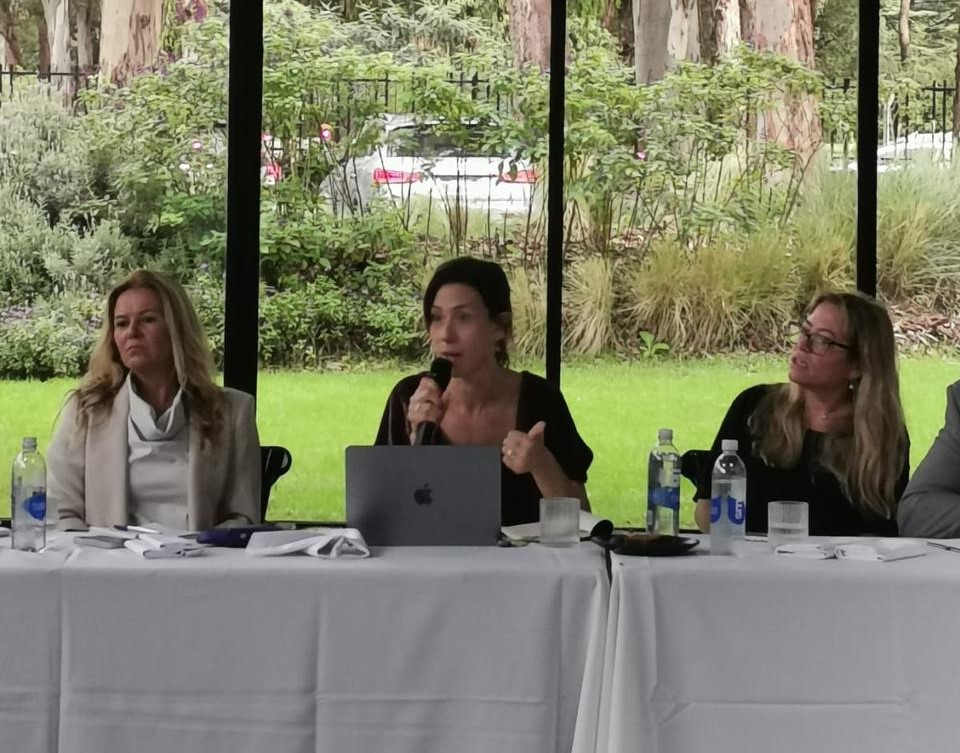
The dialogue table on "The foundations of AI: infrastructure, energy, and strategic minerals," organized by the consulting firm Insight LAC, brought together key representatives from the sectors involved in this field.

The webinar focused on analyzing the current state and strategic implications of the European Union–MERCOSUR Association Agreement in a global context marked by the fragmentation of the multilateral order and growing geopolitical tensions.
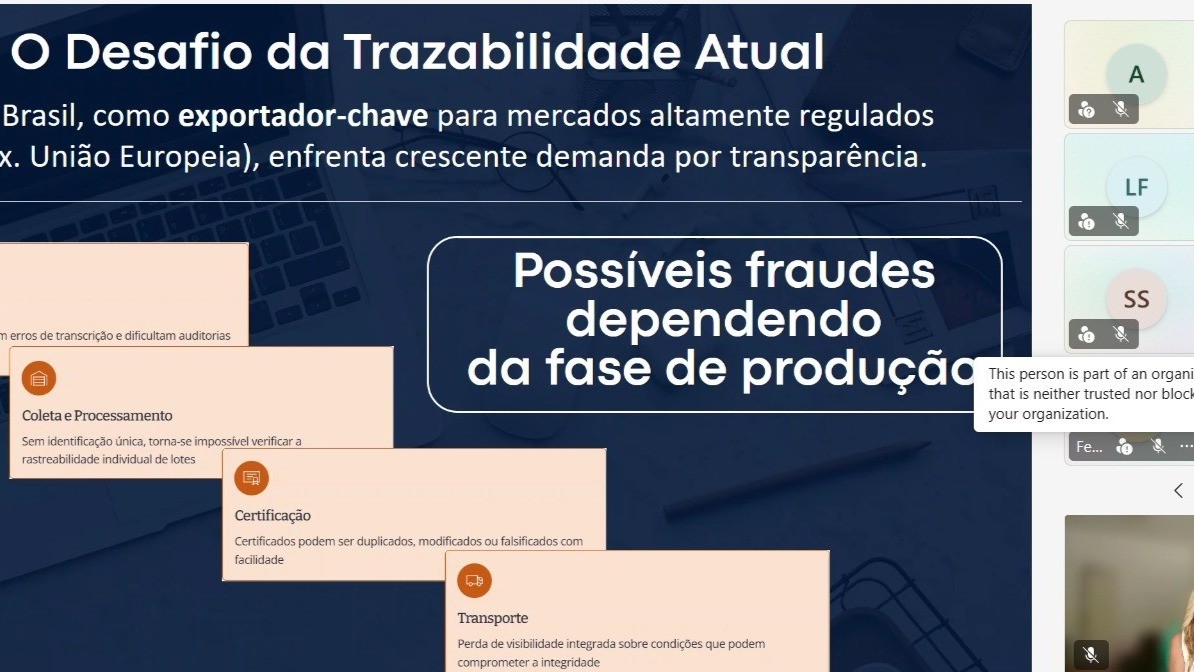
Blockchain is solidifying its position as a tool to facilitate trade. In Brazil, this technology is playing a strategic role in strengthening the traceability and competitiveness of the organic honey production chain. Ana Basco, Veronica Massera, and Lautaro M. Ramirez, members of the consulting firm Insight LAC, presented CEPAL's final report for MAPA on Blockchain in Brazil's organic honey chain. In addition to previewing some of the results, they opened up a dialogue to advance the adoption of this tool.

Artificial intelligence is the new axis of global economic power. With a market projected to grow from US$ 189 billion in 2023 to US$ 4.8 trillion in 2033, this technology is poised to account for nearly 30% of all frontier technologies. This economic volume exceeds the combined gross domestic product of South America, doubles the economy of Africa, and is equivalent to more than one-fifth of Western Europe's GDP.
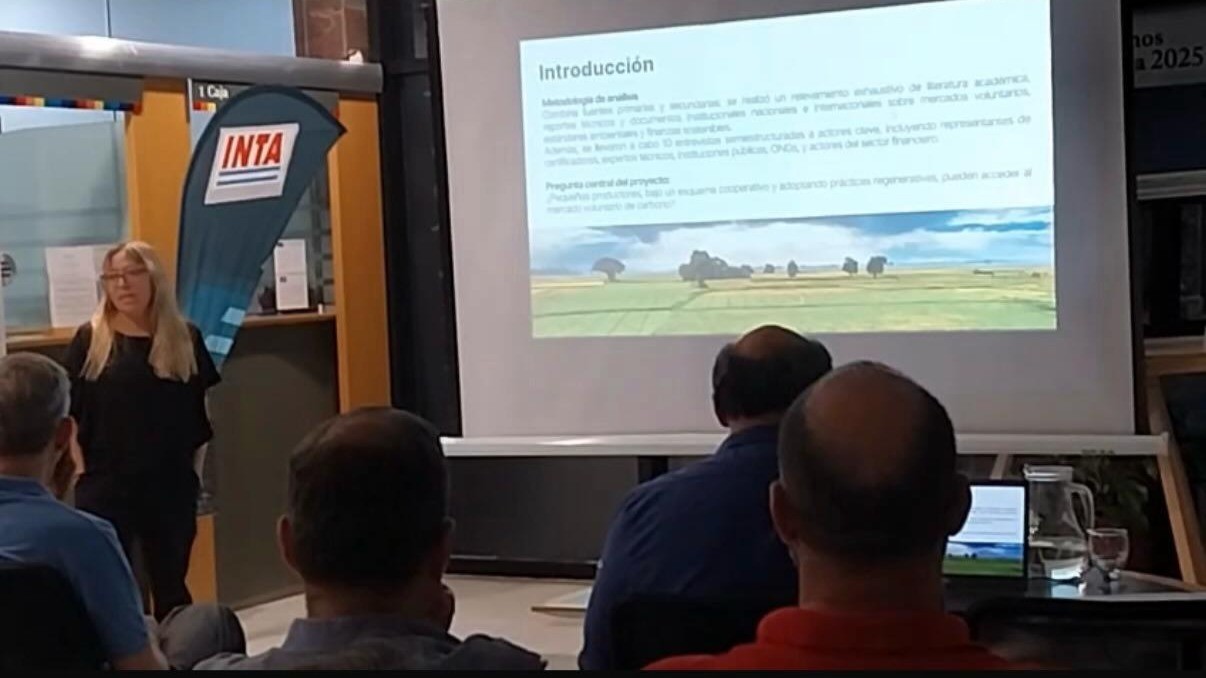
The transition toward more sustainable productive models has ceased to be a distant horizon and is beginning to take shape on the ground. How the voluntary carbon market and the nascent biodiversity credit scheme work was the conversation starter raised by Jimena Calvo, director of Insight LAC, within the framework of the "Crecer Cooperando" (Growing by Cooperating) Program. This program promotes regenerative agriculture practices and is driven by the Fundación Banco Credicoop and the IDB Lab, alongside technical support from the National Agricultural Technology Institute (INTA). Likewise, it addresses the opportunity to certify good agricultural practices to access more markets with better prices.

Paula Garnero and Ana Basco, directors of Insight LAC, participated last week in the seminar "New mechanisms and opportunities in Triangular Cooperation between the EU and Ibero-America." The event was organized by the Ibero-American General Secretariat (SEGIB) in Montevideo, with the support of the European Union, the Uruguayan Agency for International Cooperation, and other multilateral organizations.

Since 2022, UNESCO has celebrated World Futures Day every December 2nd, with the intention of “promoting the collective capacity to think, plan, and debate around future scenarios from a creative and inclusive approach, where technologies such as artificial intelligence and climate change are two fundamental axes” to be discussed, especially in a scenario where geopolitics introduces new challenges.

Our director, Ana Basco, had the honor of participating as a commentator in the presentation of the book Artificial Intelligence Atlas for Human Development in Latin America and the Caribbean by UNDP, authored by Gustavo Beliz. The event was organized by Universidad Austral, Buenos Aires.

Paula Garnero presented at the Federal Investment Council (CFI) the Roadmap for the Strategic Adoption of AI in Argentine Provinces, a document we have been developing alongside the CFI technical team through sustained and federal teamwork.

Ana Basco, director of Insight LAC, spoke during the seminar "Blockchain in International Trade" in Santiago, Chile. The event was organized by the United Nations Economic Commission for Latin America and the Caribbean (ECLAC), the Ibero-American Blockchain and Cybersecurity Network (RIBCI), and the Institute of International Studies (IEI) of the Universidad de Chile.
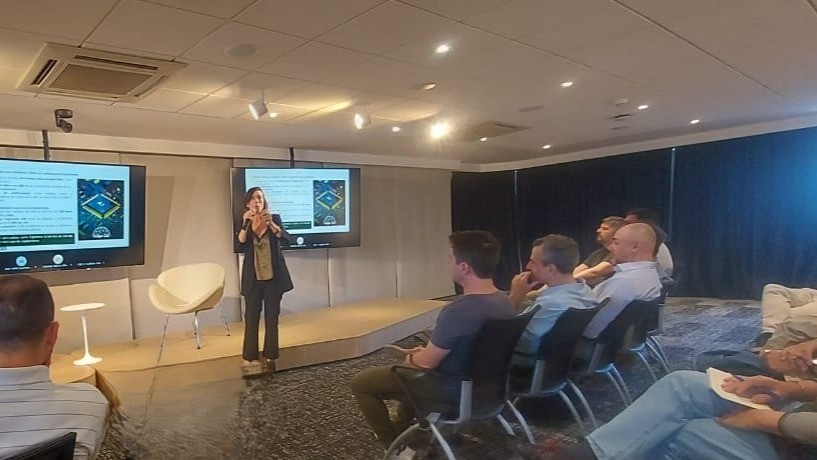
Artificial intelligence (AI) has ceased to be an emerging technology to become the engine that is reshaping the global economy. The AI Index 2025, the most comprehensive report on AI evidence, shows a structural shift: in 2024, global investment in AI reached US$ 252 billion, 26% more than the previous year and 13 times more than a decade ago. The United States leads with more than US$ 109 billion, followed by China, while generative AI alone received US$ 34 billion. Investment is concentrated in three pillars that support the entire ecosystem: development of models (foundational, multimodal, generative), sectoral AI applications, and deep infrastructure: chips, data centers, cloud computing, fiber optics, and all the technological backend necessary for the current revolution.
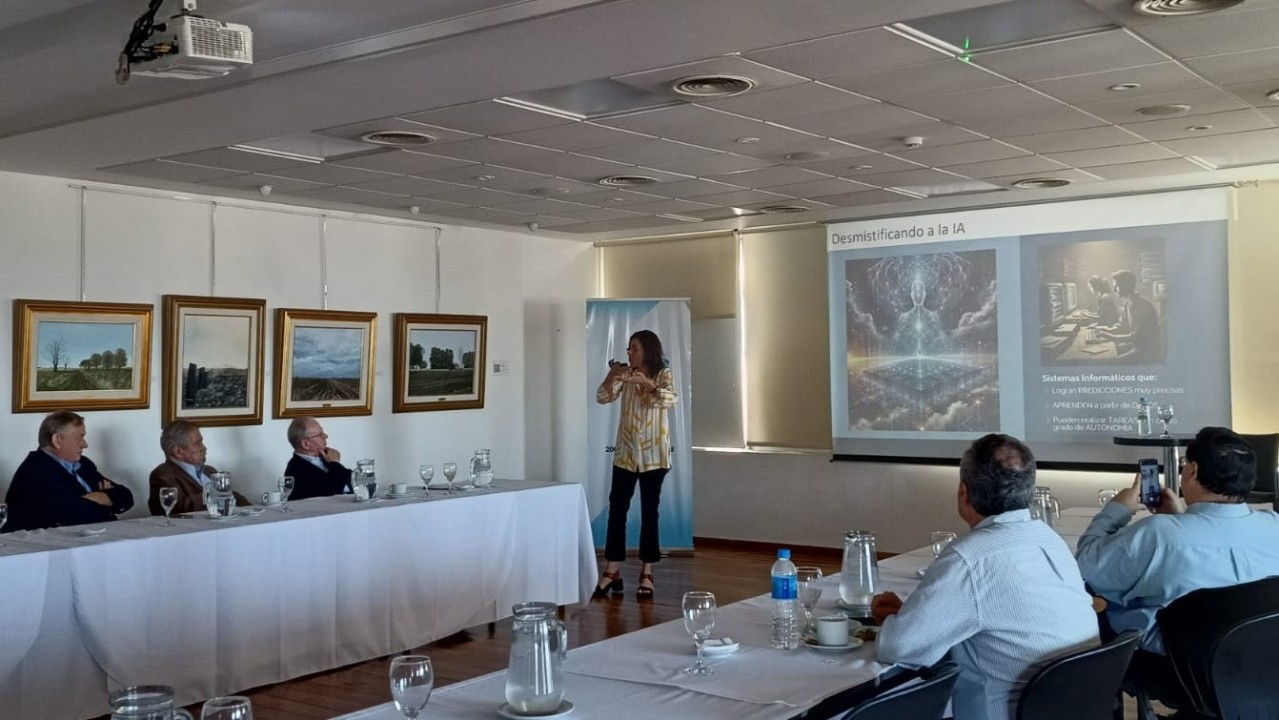
On Thursday, November 13, Paula Garnero, director of Insight-Lac, was at the German Club talking about a topic that is starting to take hold on the country's strategic agenda: Is it possible to think about a 500MW Data Center in Argentina? What does it mean for Argentina to be able to "export computing power" for US$ 1 billion? These were some of the questions that Paula Garnero raised during the meeting "Investing in Argentina in the era of artificial intelligence," held at the institution.

Days away from the full entry into force of the European Union's Carbon Border Adjustment Mechanism (CBAM), it is key to understand its implications for Argentina and define concrete actions to prepare ourselves and enhance our export opportunities.

In a world driven by tensions, Latin America stands out as a region with limited interstate conflicts, majority democracy, and abundant strategic natural resources for the energy transition and global food security.
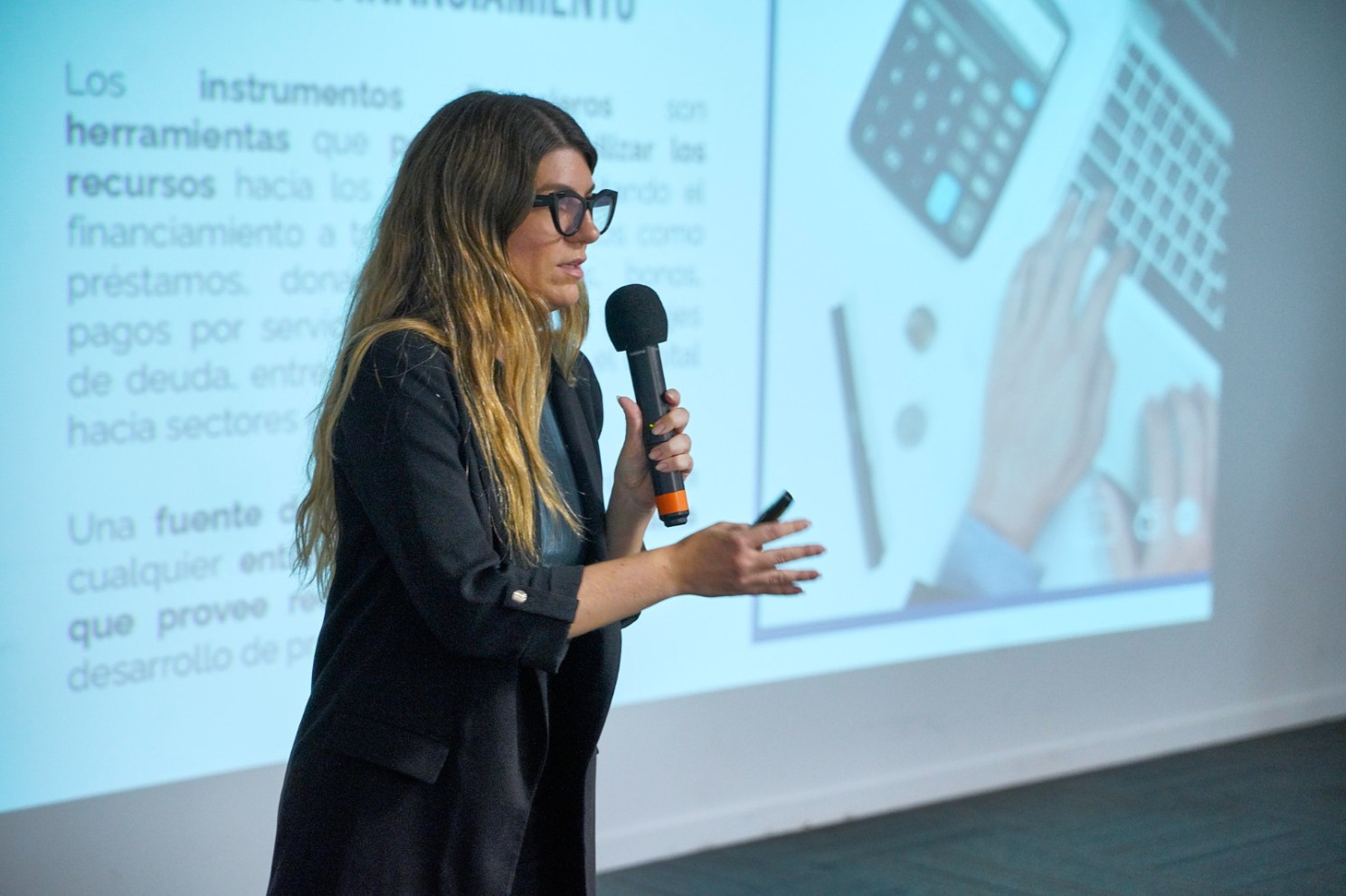
How do you choose the most effective financial instrument to channel investments into projects with a positive environmental impact? This was the core theme of the presentation given by Jimena Calvo, co-founder of Insight LAC, and Magdalena De Lucca, a specialist in sustainability and climate change. The presentation took place within the framework of the Federal Training Program in Environmental Management of the Federal Investment Council (CFI). Choosing the right instrument and funding source requires a comprehensive analysis and depends on criteria such as project type, risk level, expected results, and the capacity to generate verifiable environmental benefits.
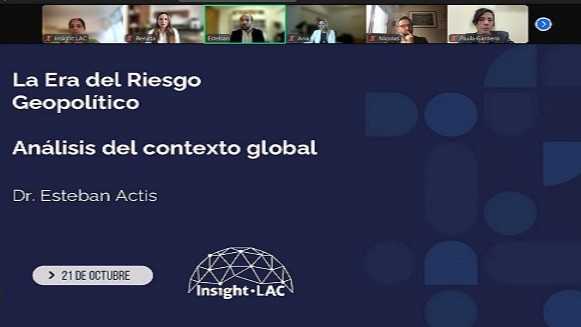
A new Insight LAC webinar addressed the current world order, focusing on the shift generated by US tariffs.

The financial transition toward sustainable investments responds to an increasingly clear economic logic: climate risks are also financial risks. In a context where global capital seeks green and resilient projects, Latin America has the opportunity—and the challenge—to strengthen its environmental and technological governance to attract investments that are being fiercely contested on a global scale today.

The question is not whether AI will have an impact, but rather how we position ourselves so that it serves as an engine for inclusive development.

Artificial intelligence is positioning itself as a potential ally in addressing the mental health crisis, although experts warn about its risks and limitations.

The fear of becoming a victim of violent crime has become commonplace. This is a structural problem, fueled by inequality, impunity, and institutional distrust.