The development of data centers, the availability of energy, and the potential of critical minerals are now emerging as pieces of the same strategic puzzle that, when approached in an integrated manner, can determine a country’s position in the new global economy driven by artificial intelligence. It is a challenging task because, alongside projections of strong productive expansion, employment-related challenges, and the need to define clear incentives, there is also a debate about how to articulate public policies that encourage private investment and technological development so that Argentina can capitalize on this opportunity and transform its resources into sustainable added value.
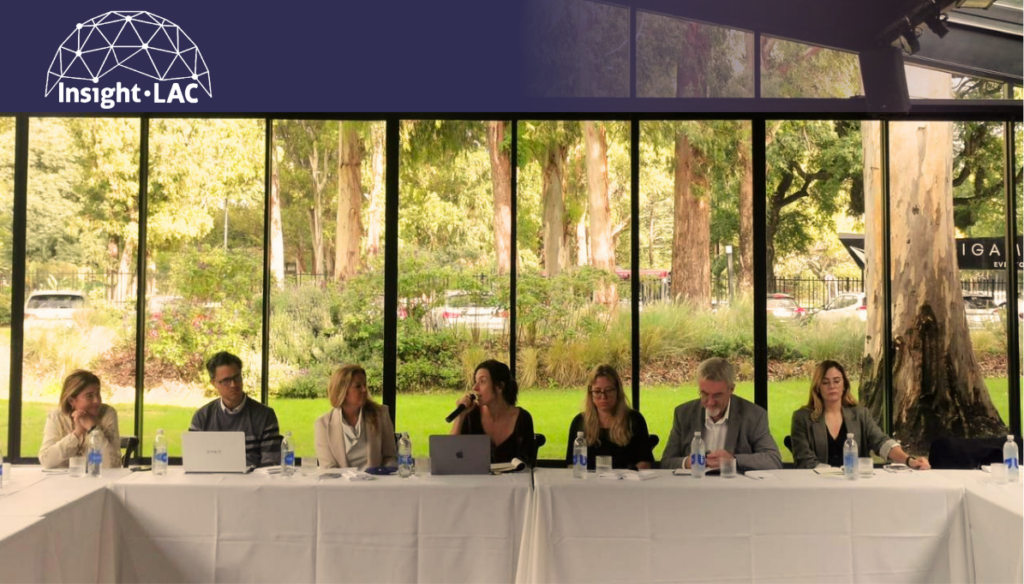
These were some of the key conclusions that emerged from the roundtable discussion entitled “The Foundations of AI: Infrastructure, Energy, and Strategic Minerals,” organized by the consulting firm Insight LAC, which brought together leading figures from the sectors involved in this field. Opening the event, Paula Garnero, Director of Insight LAC, noted that in recent months global economic growth has been strongly driven by investments in artificial intelligence, and that nearly 90% of these investments have been concentrated in the physical components that make its deployment possible: computing infrastructure, energy, and mineral resources.
She emphasized that for Argentina and Latin America, these three agendas cannot be addressed in isolation. Instead, there is a need to move toward a strategic and integrated vision that can translate this opportunity into concrete projects, while also defining public policy guidelines that stimulate private investment and promote the development of infrastructure capable of anchoring productive activities.
Fernanda Ávila, National Deputy and former Secretary of Energy of Argentina, referred to the mining projects currently underway and under evaluation in the country, describing the impact of ongoing initiatives as “phenomenal.” For that reason, she estimated that current annual mineral production of 120 tons could increase to 600 tons by 2035. “This obviously goes hand in hand with investment and development, and although these are just figures, they reflect an expectation supported by the sustained growth we are witnessing,” she said.
For his part, Guillermo Wichmann, CTO of Nokia, addressed the implications of artificial intelligence from the perspective of infrastructure availability. “Artificial intelligence is a balance between two components: training models to process actionable knowledge, and inference. This introduces the concept of low-latency inference data centers, which must be located close to where these processes take place. Projects with these characteristics already exist throughout the region. And this is part of the path toward digital transformation,” he emphasized.
Next, Martín Olmos, Principal Executive at CAF’s Digital Transformation Directorate, discussed computing capabilities—particularly the development and distribution of data centers worldwide—and the factors that explain their location. “There is a strong concentration in North America, Europe, and Asia, which account for 90% of global computing capacity,” he noted. “Three major factors explain this concentration: energy availability, international connectivity, and the existence of sophisticated digital demand from both businesses and governments.” He also explained the different models adopted by countries. In the region, Brazil is the leader, followed by Chile, Mexico, and Colombia, with Argentina and Peru ranking after them.
Marina Rosso Severino highlighted advances in connectivity throughout the country and shared her experience working with the mining sector. She stressed the need to strengthen provincial capacities so that local governments can effectively oversee companies in the sector and ensure compliance with environmental and safety regulations. She also encouraged participants to view data center infrastructure within the framework of an economic strategy linked to intensive data use for both industry and services.
Another central topic of discussion was how to advance value creation and the development of scientific and technological capabilities around the new AI economy. In this context, participants emphasized that public policy should not only support infrastructure investments but also strategically guide the development of activities that enable greater value capture at the local level.
The discussion also explored the opportunities that could emerge from a semiconductor development strategy, similar to those being pursued in countries such as Brazil, Mexico, and Costa Rica, which participate in assembly, testing, and packaging activities. It was noted that Argentina possesses significant capabilities in semiconductor design—essential for the functioning of artificial intelligence—which creates concrete opportunities for integration into this value chain. However, participants also pointed out that this is a highly concentrated global market, where manufacturing requires investment scales and conditions that are difficult to replicate locally. In this regard, it was suggested that a more realistic strategy would focus on strengthening existing design capabilities rather than promoting manufacturing initiatives that face substantial structural constraints.
Other issues raised during the debate included the need for long-term public policies that provide predictability for investments, regulations concerning artificial intelligence and the question of at what level existing or future regulations should be applied, as well as the possibility of creating a network of small data centers capable of responding to new demands. The discussion also addressed how to coordinate public-private action to generate new capabilities and how to design strategies that have a positive impact on employment. These topics rounded out the contributions of participants in a dialogue that promises to continue and deepen a discussion that has only just begun.